
Blog
Hot Tap Technology: How Pipelines Are Modified and Repaired Without Shutting Down
In the oil & gas and petrochemical industries, shutting down a pipeline — even temporarily — can disrupt operations, delay production and cost significant revenue. Yet pipelines often need modifications, repairs or new connections during their service life. Hot tap technology solves this problem, allowing engineers to work on a live, pressurized pipeline without interrupting the flow inside it.
What Is Hot Tapping?
Hot tapping is a technique used to create a new connection or branch on an existing pipeline while it remains in service — under full pressure and flow. Instead of draining, depressurizing and shutting down the line, a specialized fitting is welded or clamped onto the pipe, and a cutting tool is used to make the opening while the system stays operational.
This process typically relies on a few key components:
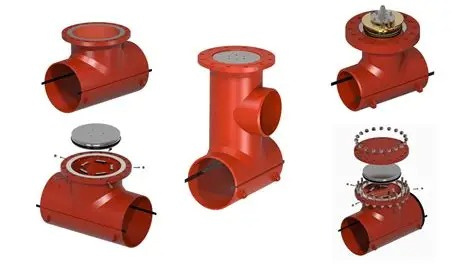
- Split Tees — fittings that wrap around the existing pipe to create a secure connection point
- Line Stop equipment — used when a section of pipe needs to be isolated for repair or maintenance, without stopping flow through the rest of the system
- Specialized cutting and tapping machines — designed to safely cut into the pipeline through the new fitting
Why Hot Tapping Matters
The biggest advantage of hot tap technology is continuity of operations. For industries where pipeline downtime translates directly into lost revenue or supply disruption, hot tapping offers a way to:
- Add new branch connections without shutting down the main line
- Install monitoring or metering equipment on active pipelines
- Isolate damaged sections for repair using line stop techniques, while the rest of the system stays online
- Avoid the safety risks and costs associated with full depressurization and restart procedures
Precision and Safety Are Non-Negotiable
Working on a live, pressurized pipeline carries inherent risk, which is why hot tap fittings and split tees must be engineered with extreme precision. Critical considerations include:
- Exact dimensional fit to the pipe’s outer diameter and wall thickness
- Material compatibility with the pipeline’s pressure rating and the substance being transported
- Certified welding processes to ensure the fitting forms a secure, leak-free seal
- Thorough quality testing — including hydrostatic testing and non-destructive testing (NDT) — before the fitting is put into service
A poorly manufactured or improperly fitted hot tap component isn’t just inefficient — it’s a serious safety hazard. This makes the manufacturing quality of split tees and line stop fittings just as important as the technique itself.
Supporting Uninterrupted Operations Across UAE’s Industrial Sector
As pipeline networks across the UAE’s oil & gas, petrochemical and power sectors continue to expand and age, the need for non-disruptive maintenance and modification solutions is growing. Hot tap technology, backed by precision-engineered fittings and rigorous quality control, allows operators to keep critical infrastructure running safely — without the costly downtime that full shutdowns require.